
Blog & Press Releases
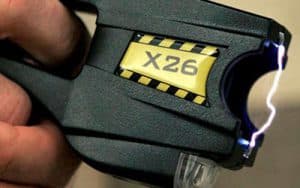
Federal appeals court finds police use of taser on nonviolent bystander to be unlawful
Last week, in Kent v Oakland County, the Sixth Circuit Court of Appeals issued a decision finding that police officers could not be shielded from a civil rights lawsuit by a victim of excessive police force involving in a taser.

CounterPunch has us on their list of “10 Groups That Don’t Flinch Under Fire”
CounterPunch puts CLDC on their list of “10 Groups That Don’t Flinch Under Fire (And, Thus, Deserve Your Support)”
Fighting corporate SLAPPs, from the streets to the courtroom
It’s been several months since a Washington State District Court granted four anti-harassment orders against me from Chris Toher, Lew Guerrette, Dave Harrison, and James McReynolds. Now we are finally approaching the culmination of the appeal of those orders, and I am represented by the Executive Director of the Civil Liberties Defense Center and the President of the Seattle Chapter of the National Lawyers Guild as we fight back against the attempt at corporate repression.

Know Your Rights resources available in Arabic
With the increasingly abusive Islamophobic response that has been coming from ignorant individuals within the United States, the CLDC will continue to stand strongly with our Muslim and/or Middle Eastern community members.

Federal appeals court rejects Wisconsin anti-abortion law as unconstitutional
Last week, in Planned Parenthood of Wisconsin v. Schimel, the federal Seventh Circuit Court of Appeals rejected the Wisconsin law banning doctors from providing abortions if they don’t have hospital admission privileges within 30 miles.

Political Prisoner Returns to U.S. after 20 Year Prison Sentence in Peru
Lori Berenson has spent much of the last 20 years in prison in Peru following being convicted of aiding the Tupac Amaru Revolutionary Movement in planning an assault on the Peruvian Congress. This week marked the end of her sentence and being able to leave Peru, so she now heads home to the U.S.

Celebrate #GivingTuesday
Help us reach our goal of raising $1,000 on Giving Tuesday. Help us reach this goal by making a year end gift, becoming a monthly donor, or encouraging your friends and family to give by forwarding this email.
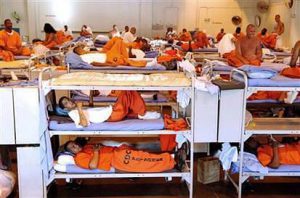
Federal court rules in favor of prisoners’ rights to adequate medical treatment
This month, in Shadrick v. Hopkins County, the federal Sixth Circuit Court of Appeals ruled that a private, for-profit corporation providing medical services to prisoners may be liable for violating the federal constitutional rights of prisoners by failing to adequately train its medical staff.

Transgender and Imprisoned
Prison holds a particular set of horrors for the transgender community. Until recently, American prisons housed transgender inmates by genitalia, and gender-confirming treatments of any kind were unavailable to the vast majority of transgender inmates.
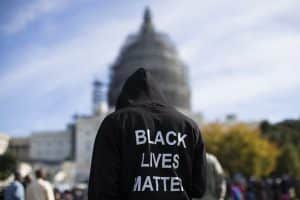
Urban League of Portland calls for Answers to Electronic Surveillance
It has been discovered that the Oregon Department of Justice has been conducting digital surveillance on Oregonians who used the hashtag #BlackLivesMatter.

Resisting the Animal Enterprise Terrorism Act
It was in 2006 that the AETA was passed into law. The AETA was crafted by the American Legislative Exchange Council, a group of corporate power players who write pieces of model legislation that suit their interests, and then ALEC passes off the legislation to members of Congress.

Big News: We’ve hired two new associate attorneys
We couldn’t wait any longer to expand our legal team and right now we have an opportunity to permanently fund two new attorney positions. In October we brought on two new staff attorneys, who have both been working with us as law clerks for years.

First Amendment victories in New York
Last month, First Amendment defenders won two significant victories in New York. First, protestors of Donald Trump’s racist run for President secured the right to protest in front of Trump Tower in downtown Manhattan.
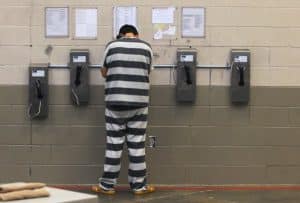
FCC Caps Prison Phone Rates
Last week, the Federal Communications Commission (FCC) issued sweeping reforms to jail phone-call rates. In many states, prior to the reforms, the cost of a 15-minute in-state call could cost upwards of $5.

Federal appeals court allows lawsuit against NYPD for Muslim spying
Last week, in Hassan v. New York, the Third Circuit Court of Appeals reversed a lower court and held that a lawsuit may move forward against the NYPD for spying on Muslims. The plaintiffs filed the lawsuit against the NYPD for discriminating against them as Muslims.
Federal case addresses trauma as a disability under Americans with Disabilities Act
Last week, in P.P. v. Compton Unified School District, a federal court in Southern California held that a case may move forward alleging that trauma impacts from poverty and racism qualify as a disability under the Americans with Disabilities Act (ADA). The plaintiffs in the case are multiple youth, and their teachers, who work or attend public schools in Compton, California. Compton is one of the most socio-economically distressed areas in the country, and it experiences attendant high rates of violent crime and homelessness. The youth in the Compton school district experience horrifying trauma in their daily lives, such as being stabbed or witnessing friends and family shot or stabbed in front of them, sleeping on top of the school cafeteria roof for months due to homelessness, and being arrested at gunpoint by police while at school in a case of mistaken identity.
Federal appeals court allows trial against police who shot suicidal Texas youth
Last week, in Cole v. Carson, the U.S. Court of Appeals for the Fifth Circuit in Texas held that a teenager who was shot by police could take the police to court for federal civil rights violations. The teen had recently broken up with his girlfriend and had walked into the woods pointing a gun to his own head. He backed out of the woods with the gun still to his head and then turned to his left to continue walking and police officers opened fire on him.
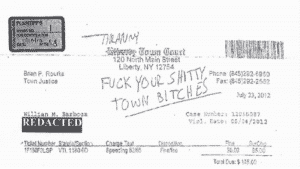
Federal court affirms constitutional right to criticize police
Last week, a federal court in New York affirmed the First Amendment right to criticize police using profane language. In the case, Barboza v. D’Agata, the federal court in the Southern District of New York addressed a case in which an individual received a speeding ticket in the town of Liberty, New York. He agreed to pay the ticket by mail, but first decided to make his feelings clear by crossing out the town’s name “Liberty” and writing “Tyranny” on the ticket, and then writing, in all capital letters, “FUCK YOUR SHITTY TOWN BITCHES.” He then sent in his payment with this special personalized message.
Federal courts affirm civil liberties in Washington D.C. and Michigan
Last week, federal courts in Washington D.C. and Michigan issued orders affirming the civil liberties of deaf prisoners and suicidal individuals who call police for help during a mental health emergency. In Washington D.C., a federal court held that the Americans with Disabilities Act requires prisons to affirmatively provide appropriate communication services for deaf inmates. In Michigan, a federal court held that police officers ignored the protections of the 4th Amendment when they responded to a potentially suicidal individual by breaking windows and throwing tear gas canisters into his home, and ultimately shooting and killing him.
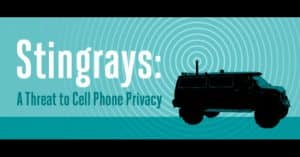
New federal policy requires search warrants for stingray cellphone surveillanc
Last week the U.S. Department of Justice announced a new policy that all federal law enforcement agents must obtain a search warrant prior to using a “stingray” for cell phone surveillance. Until last week, there was no policy in place requiring federal law enforcement officials to obtain a search warrant prior to conducting this type of surveillance.
 English
  Spanish
  Arabic
  Chinese
  Dutch
Dutch  French
  German
  Italian
  Portuguese
  Russian
  Hindi
Hindi