
This week, CLDC chooses to center key events and issues central to Indigenous-led advocacy and sovereignty. As we approach a time historically marked by Eurocentric settler colonial narratives, it’s crucial to reflect on the ongoing struggles faced by Indigenous tribes and peoples in the United States and beyond.
The holiday serves as a reminder of the painful history of dispossession, violence, and attempted genocide and erasure that Indigenous peoples have experienced since the arrival of European settlers. Yet, it also offers a moment to highlight the resilience, activism, and resistance that continue to shape Indigenous movements to this very day. In honoring the original land and water protectors of the land now called the United States, here are some important actions and causes that we’d like to elevate:
The Dakota Access Pipeline
The Standing Rock protests against the Dakota Access Pipeline (DAPL) galvanized Indigenous communities and environmental activists, particularly through the leadership of the Standing Rock Sioux Tribe and other water protectors. Among those who suffered injuries during the protests were CLDC clients, Eric Poemoceah and Sophia Wilansky. Both cases are still unresolved after eight years, as our lawyers press on for judgment in their favor.
The Water Protector Legal Collective (WPLC) has played a vital role in providing legal support for those affected by the protests, helping to challenge unlawful charges and defending the constitutional rights of water protectors. Their work strengthens the ongoing fight for environmental justice and the protection of Indigenous sovereignty. Currently, WPLC represents the Standing Rock Sioux Tribe who filed an appeal Nov. 5, 2025 challenging the illegal operation of the Dakota Access Pipeline, which runs a half-mile north of the Tribe’s reservation and across lands protected by treaty. Check out the links below for additional information on this case:
“The appeal follows a federal court ruling on Oct. 14, 2024, that allowed the pipeline to continue operating without an easement the tribe says was never legally granted. The U.S. Army Corps of Engineers has permitted the pipeline to run under what the tribe calls an inadequate spill response plan.
Standing Rock leaders say the pipeline threatens water, sacred sites, and future generations.
“This appeal is a necessary step to hold the U.S. Army Corps accountable for its unlawful action,” Tribal Chairman Steve Sitting Bear said in a statement.
The Tribe’s legal team seeks to shut down the pipeline until it complies with all federal regulations. Attorneys representing the tribe include Jeffrey C. Parsons, Peter Capossela and Natali Segovia of the Water Protector Legal Collective.
Doug Crow Ghost, the Tribe’s water resources director, said the risk of oil spills in Lake Oahe — the Tribe’s main source of drinking water — remains a major concern.
“People think Standing Rock ended when DAPL went online in 2017. For us, this never ended,” he said. “This is our everyday fight to still protect the water.”” (KXNET)
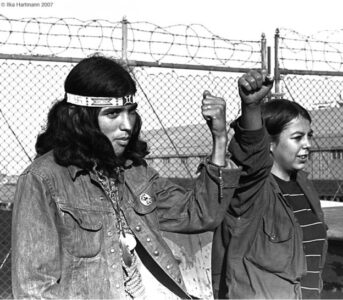
Photo copyrighted by Ilka Hartmann.
The Alcatraz AIM Occupation
The Alcatraz American Indian Movement (AIM) Occupation, which began on November 20, 1969, was a key act of resistance led by AIM, which seized the abandoned federal prison at Alcatraz Island. The activists demanded the return of Native lands and to divulge the U.S. government’s history of treaty violations and exploitation of tribes and Indigenous peoples. The 19-month occupation drew national attention to issues such as poor living conditions, lack of education, and healthcare for tribes, making a statement about the necessity for Indigenous sovereignty and self-determination.
Although the U.S. government ultimately ended the occupation, the event became a turning point in the Native American rights movement. It sparked widespread media coverage and inspired further protests throughout the 1970s. The legacy of the Alcatraz occupation continues to influence Indigenous activism, serving as a symbol of resilience and the ongoing fight for tribal justice, LandBack, water justice, and tribal sovereignty.
COP30
At the 2025 United Nations Climate Change Conference (COP30), Indigenous leaders are demanding recognition of their rights, traditional knowledge, and land stewardship practices. The Tupinambá, Indigenous to Brazil, have long been coordinated and activated in pushing for climate policies that protect their territories and prioritize their political participation. During COP30, dozens of Indigenous protesters forced their way into the climate summit venue and clashed with security guards at the entrance to demand climate action and forest protection. As a result of this brave action, Brazil designated ten new Indigenous territories, including one in part of the Amazon, which promises that the Tupinambá will have their culture and environment protected under Brazilian law (for now).
The activism of the Tupinambá and over 400 other Indigenous nations from across the globe highlights the vital role that Indigenous peoples play in global climate solutions, as one of the demographics most directly impacted by climate change. The Tupinambá and other Indigenous tribes, groups, and peoples continue to fight for a climate response that is both just and inclusive.
As we reflect on the history and current struggles of Indigenous peoples, CLDC remains committed to supporting the fight for justice, sovereignty, and cultural preservation.
We encourage you to learn more through these resources: